



September 2, 2025
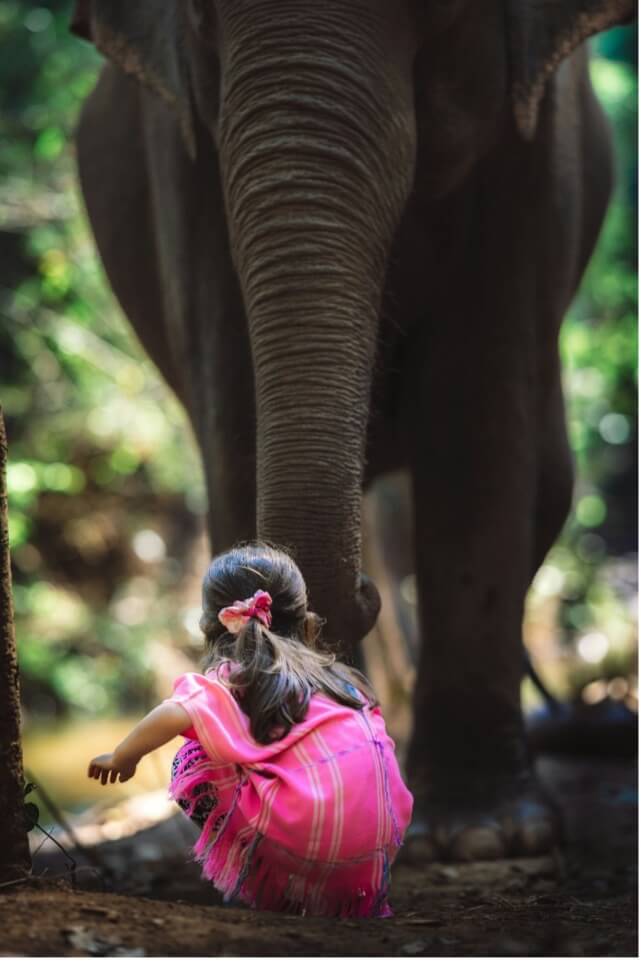
(Photo by Ryan Mayer on Unsplash)
The Psalms with Children and Elephants
Picture a 10-year-old Bible scholar. Well, picture the 10-year-old precursor to a Bible scholar: all the curiosity, none of the knowledge, talks too much in class. At her summer camp, this budding scholar gets introduced to the beauty of the Bible: the language, the images, the personal way God speaks through the text. The 10-year-old wants more. She asks her (long-suffering and patient) mother, “What’s a good book of the Bible to read before bed?” (The reasons behind the need for bedtime-specific Bible readings are unknown.) “The Psalms,” her mother immediately replies. So began my first steps down a road that, again and again, brings me back to the Psalms.
I adore the authenticity of the Psalms. Commentators since the time of Augustine (and arguably prior) have marveled at their range of human emotion: joy, patience, anger, sadness, exultation, despair, victory and quiet, humble reflection—all are present in the Psalms. When you’re looking for language to more fully express the human experience of God or to help you grapple with a particular life event, the Psalms consistently offer resources. These resources come highly recommended: as Jesus was dying on the cross, he turned to Psalm 22:1 to make sense of his experience, crying, “My God, my God, why have you forsaken me?”
I delight in the imagery of the Psalms. They are, at their heart, poetry. Though poetic speech is uncommon in everyday language, there’s something about poetry that speaks to our most vulnerable moments. In our bleakest times, poetry can facilitate our expression of hopes that may otherwise remain unspoken. At the funerals of those we love, we put sing the psalms in hymns that outline the mystery of faith, like “Beautiful Savior” (ELW 838). Through long nights of doubt and sorrow, we murmur to ourselves, “Even though I walk through the darkest valley, I fear no evil; for you are with me; your rod and your staff—they comfort me” (Psalm 23:4). The Psalms consistently offer us assistance as we struggle for words in difficult situations.
It has been said that the Bible is a book through which a lamb can wade and an elephant can swim. This paradoxical saying means that the Bible can be accessible for those new to the faith yet can also offer stimulating insights even to well-seasoned biblical explorers. It is a perfect description of the Psalms. My hope for you is that throughout next year’s Psalms studies here at Prince of Peace, you may wade into the waters of the Psalms, find places to immerse yourself, and learn to swim even deeper into the Jesus’ waters of life.
God’s Blessings,
Rev. Dr. Rachel Wrenn